Vatican Commission's Report Rejecting Ordaining Women As Deacons Draws Fierce Criticism
The Vatican released a summary of the commission's findings that critics call sexist, insulting, divisive, vague and intentionally misleading.

This story has been updated.
By Gary Gately
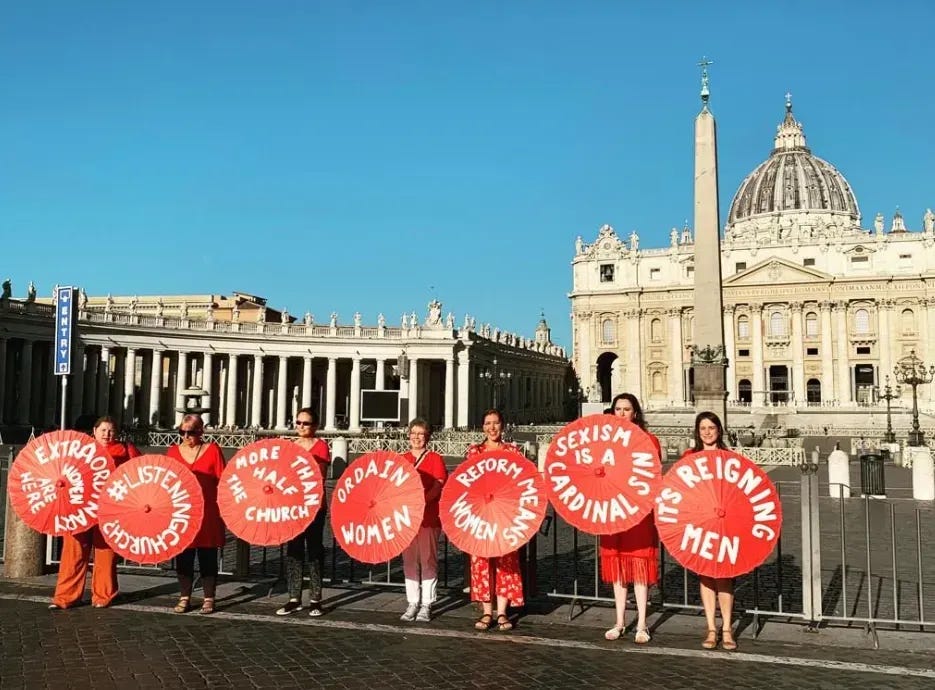
A Vatican commission’s report concluding that Catholic teaching forbids ordaining women as deacons drew fierce criticism from advocates, who argue that denying women that role reflects the all-male Church hierarchy’s sexism and its view of them as second-class citizens.
The Vatican published a summary Thursday of the findings and some key internal votes of the commission, appointed by Pope Francis in 2020 as a follow-up to a previous group on women deacons that the late Jesuit pontiff had established.
The Commission on the Women’s Diaconate concluded in a 7-1 vote in a July 2022 session that historical research and theological investigation “excludes the possibility ecclesiastical” of ordaining women as deacons but left open the prospect of further study. The summary, which the Vatican released only in Italian, did not explain why only eight of the 10 members’ votes had been recorded in that decision or identify any of the commission members.
The commission, which met for work sessions in 2021, 2022 and 2025, sent its findings to Pope Leo XIV in September and made the summary public Thursday at Leo’s request, the Vatican said.
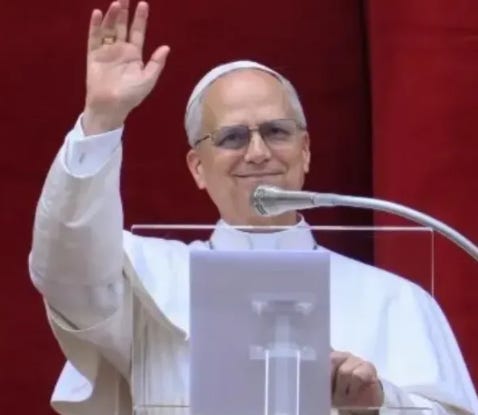
Since his election as the first U.S.-born pope in May, Leo has not spoken publicly about his views on whether women should be ordained as deacons, but said in a September interview with Crux Vatican correspondent Elise Ann Allen: “I at the moment don’t have an intention of changing the teaching of the Church on the topic.” The Holy Father added, however, that he is “certainly willing to continue to listen to people” on the issue and that, in the meantime, he plans to continue Francis’s legacy of appointing women to leadership positions in the Church.
And during a 2023 conference, then-Cardinal Robert F. Prevost said: “Something that needs to be said also is that ordaining women — and there’s been some women that have said this, interestingly enough — ‘clericalizing women’ doesn’t necessarily solve a problem; it might make a new problem.”
Advocates for ordaining women as deacons expressed dismay and outrage over the commission’s decision and the report summarizing its findings, which they said is riddled with inaccuracies, sexist, insulting, divisive, vague and intentionally misleading.
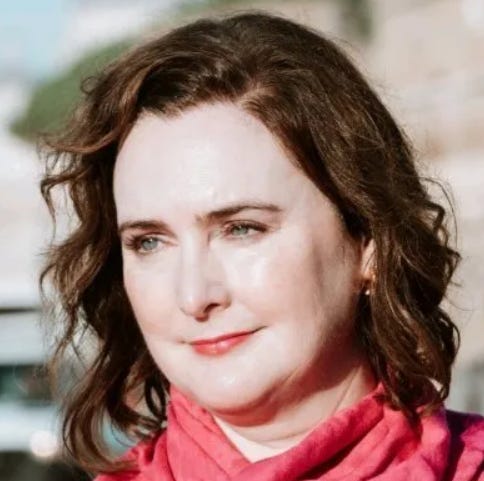
Miriam Duignan — the executive director of Wijngaards Institute for Catholic Research, a London-based progressive think tank, and a leader of Women’s Ordination Worldwide, which supports ordaining women as deacons — sharply criticized the commission and its report.
“It has taken 10 years to confirm what we feared all along — that the endless study of women was a stalling tactic,” Duignan said in an email to The Catholic Observer Friday. “Leo has spoken against extremism and hate speech, and yet this announcement seems devised to placate, and even appeal to, sections of the Catholic world who see the Church as a bastion of bigotry whose mission is to keep women in a subservient and silent role.”
Those who support allowing women to become deacons have long argued that it’s not only a matter of equality for more than half of the Catholic Church’s 1.4 billion members, but also would help ease major gaps in ministry, as the Church confronts widespread shortages of priests in the U.S. and numerous other countries. Deacons may not celebrate Mass but can perform many other clerical duties, including performing baptisms, weddings and funerals and preaching the Gospel. Some of them run parishes without priests. Women also overwhelmingly outnumber men in the Church’s workforce, including in hospitals and schools across the globe.
Conservative Catholics, however, maintain that ordaining women as deacons could ultimately pave the way to allowing women to become priests, which the Church reserves for men based on Christ’s choice of only men as his 12 apostles.
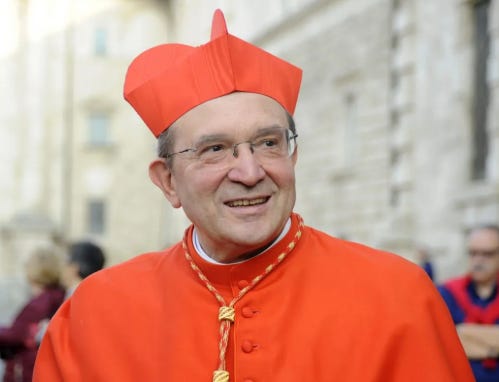
In the seven-page summary, the commission’s president, Cardinal Giuseppe Petrocchi, wrote that at the commission’s last session in February 2025, it had reviewed “a substantial and significant written material for analysis on the question of the female diaconate,” as requested by the Synod on Synodality, the major, three-year reform effort that ended last fall. But, Petrocchi wrote, only 22 individuals or groups “representing only a few countries” had submitted documents and that “consequently, although the material is abundant and, in some cases, skillfully argued, it cannot be considered the voice of the Synod, much less of the People of God as a whole.”
Petrocchi, 77-year-old former Archbishop of L’Aquila in central Italy, also noted that in the synod’s final document, the section on women’s roles received the most negative votes, 97 of the 355 total. The cardinal did not mention the fact that women comprised just 54 of the 355 voting delegates or that at the end of the Synod Vatican sessions, Pope Francis, who died in April at age 88, had reaffirmed his 2023 decision to establish 10 “study groups” to focus on hot-button issues including women’s ministry, allowing priests to marry, and expanding the Church’s outreach to LGBTQ Catholics. Francis said he believed the topics deserved more study and did not want them to detract from the main goal of the synod: creating a Church that is more welcoming, inclusive and responsive to today’s Catholics.
Petrocchi also wrote in his summary that “in many dioceses of the world, there is no ministry of diaconate, and in entire continents this sacramental institution is almost absent” adding that “where it is active, the activities of deacons often coincide with the roles proper to lay ministries or ministries in the liturgy, raising questions in the People of God about the specific meaning of their ordination.”
He did not acknowledge widespread — and growing — support for ordaining women among Catholics across the world.
In the U.S., for example, a Pew Research Center survey conducted in early February found that 68% of Catholics said the church should allow women to become deacons and 59% said it should ordain women as priests.
In June 2022, the Irish Catholic Church reported that 96% of the nation’s Catholics supported the ordination of women as both deacons and priests.
In several major Latin American countries, too, Catholics overwhelmingly supported ordination of women — not merely as deacons, but as priests, a Pew survey released in September 2024 found. In Brazil, more than 80% of Catholics said they supported ordination of women. So did 71% of Catholics in Francis’s native Argentina and 69% of Catholics in Chile, while in Peru, where Leo served for two decades as a missionary priest and bishop, 56% of Catholics favored ordination of women.
In major European countries, including France, Spain and Italy, polls have over the past decade have consistently shown Catholics’ strong support for ordaining women as deacons.
Amid such widespread support, Petrocchi’s summary amounts to yet another Vatican “statement to fob us off and just more delaying tactics,” Pat Brown, a member of Catholic Women’s Ordination, a London-based organization that advocates for ordaining women as deacons, told The Catholic Observer Friday. “The institutional Church is encouraging and validating misogyny,” Brown added.
The commission had worked in 2021 and 2022, but then did not resume sessions until 2025 after the Synod on Synodality’s final report, which urged further “discernment” on the possibility of women becoming deacons. After returning to work, the commission clearly signaled a move away from that prospect.
Members voted 9-1 at the commission’s final meeting in February to approve a “preamble” that stated: “It is now appropriate to broaden women’s access to ministries established for community service…. It is now up to the discernment of pastors to evaluate which additional ministries can be introduced to meet the concrete needs of the Church of our time, thus also ensuring adequate ecclesial recognition for the diakonia [Christian service to others] of the baptized, especially women. Such recognition will be a prophetic sign, especially where women still suffer situations of gender discrimination.”
Petrocchi also wrote that some commission members viewed ordination of women as “unacceptable, as it is in discontinuity with Tradition” and expressed concerns about “dangerous anthropological confusion, by accepting which the Church would align herself with the spirit of the times.”
He also stated that in the documentation the commission received, “many women described their work for the Church, often carried out with great dedication, as if it were a sufficient criterion for ordination to the diaconate” and added: “Others spoke of a strong ‘feeling’ of having been called, as if it were the necessary proof to guarantee the Church the validity of their vocation and demand that this conviction be accepted. Many already held diaconal functions, especially in communities without a priest, and believed they were ‘worthy’ of receiving ordination, having, in some way, acquired the right. Others simply spoke of wanting ordination as a sign of visibility, authority, respect, support and, above all, equality.”
Critics characterized Petrocchi’s statements as sexist and dismissive and said they impugned the motives of those who support the ordination of women as deacons, without justification.
“Women called by the Holy Spirit need to be able to test this calling just as men can,” Brown said, adding: “Who are these commission members who find this unacceptable? We’re not allowed to know who they are. Secrecy again. Don’t they ever learn that secrecy is their downfall?”
Phyllis Zagano — who had argued in favor of ordaining women as deacons in 2016 as a member of Pope Francis’s first commission, which never released a report on its findings — also denounced the newly released Vatican document.
“It is in effect a statement that the Catholic Church officially views women as ‘other,’” Zagano wrote in a piece published by Religion News Service. “The commentary … further damages the world’s picture of the Catholic Church, already tarnished by pederasty scandals and reports of financial mismanagement,” she continued.
Zagano noted that Petrocchi’s “unrelentingly opaque” summary includes footnotes that refer to unpublished commission reports and votes, some suggesting that votes were taken when not all commission members were present, and that the text misstates Orthodox tradition, ignoring its rich tradition of ordained women deacons (whom it refers to as “deaconesses”) throughout history, up until the present day.
Petrocchi also said the commission cast doubt on the evidence cited by advocates for ordaining women as deacons, writing that in 2021, members had unanimously approved the statement: “In the current state of historical research and of our knowledge of the biblical and patristic testimonies, it can reasonably be affirmed that the female diaconate, which developed unequally in the different parts of the Church, was not understood as the simple female equivalent of the male diaconate and does not seem to have had a sacramental character.”
Zagao, a widely acclaimed Catholic scholar and author and a senior research associate at Hofstra University, retorted: “This is an ecumenical misstep made just after Pope Leo’s trip to Turkey and Lebanon, where he met with leaders of Eastern Orthodoxy and with the patriarch of the Maronite Church, whose canon law allows for the ordination of women as deacons,” Zagano wrote. “If synodal discussion is to include all Christians, it would be best to collect all the facts….
“The point of synodality,” Zagano wrote, “is for all the people of God to prayerfully discern how best to foster the church’s mission, which, in short, is preaching the gospel and acting on it…. That a commission now seeks to kill synodal discussion about women deacons can only end in more suffering for women all over the world.”
Former Irish President Mary McAleese, who has served as chancellor of Trinity College in Dublin since 2019, also lambasted the commission’s conclusion, telling The Irish Times that it represents “the end of Rome rule, of obedience to a discredited Magisterium, of faith in an institution on its way to self-inflicted oblivion. The acceptance of gender equality could possibly have saved it. Nothing will now. Especially not Pope Leo.”
McAleese, who served as president from 1997 to 2011 during two terms, asked: “Who in the 21st century can take these people seriously? I refuse to, as the ordained priesthood disappears in the West and the Magisterium slides into global irrelevance, as infants baptized in their tens of thousands wake up as adults to their forced conscription into submissive life membership, and exercise their human rights to walk away.”
The U.S.-based Women’s Ordination Conference (WOC), which supports ordination of women as deacons and priests, said it is “appalled by the Vatican’s refusal to open its doors to women, even a crack.”
“Make no mistake: This is a decision that will harm the global Church,” WOC said in a statement. “Few will have the patience to excavate hope from the Vatican’s claim there is ‘need for further study’ on the question of women deacons. If further study were truly needed, this commission might have engaged more women in its efforts and taken seriously the responses submitted by the People of God after a worldwide call for input.”
WOC pointed to biblical and historical evidence that for centuries, “women have served in the tradition of Phoebe,” a deacon cited in one of the letters of St. Paul.
“Women of every generation have experienced and expressed their vocation from God to serve the church in ordained ministry,” the organization said. “Today, the diaconal, and priestly, work of women keeps the church functioning around the world.”
Like numerous other advocates who support ordaining women as deacons, WOC condemned the commission’s split vote at its February 2025 session, with five members endorsing this statement: “The masculinity of Christ, and therefore the masculinity of those who receive Holy Orders, is not accidental, but is an integral part of the sacramental identity, preserving the divine order of salvation in Christ. Altering this reality would not be a simple adjustment of ministry but a disruption of the nuptial meaning of salvation.”
WOC called that “a deep, and theologically unsound, insult” and said: “For many women, this will be the final straw.”
But Taylor Marshall, a conservative Catholic commentator, posted a video from his podcast in which he quoted Petrocchi’s report at length, then mocked and repeatedly laughed at those who support the ordination of women as deacons, labeling their arguments “ridiculous” and “absurd.”
”They said they want to be ordained deaconesses for support and, above all, equality…. What do you mean you need support? Emotional support? Financial support? That’s why you want to be a deacon? Bad.”
Marshall also has repeatedly called homosexuality a sin, opposes abortion rights and LGBTQ rights, strongly supports U.S. President Donald J. Trump’s aggressive immigration enforcement tactics and has staunchly defended former Tyler, Texas, Bishop Joseph Strickland. Francis removed Strickland from his post in 2023 after the he had called synodality “garbage” and endorsed a video that attacked the Argentine pontiff as a “diabolically disoriented clown.”
In the video, Marshall, who enjoys immense popularity among conservative Catholics in the U.S., claimed that those supporting ordaining women as deacons are not motivated not by a genuine a desire to devote their lives to serving the Church, but instead, by one main concern: that “it’s not fair, it’s not equal” that they cannot be ordained deacons.
Referring to the video, the Catholic Women’s Ordination’s Brown said: “This is what we mean when we say the institutional Church is encouraging and validating misogyny. Leo has attacked the far-right Roman Catholic Church in the U.S. Can he not see how hypocritical this commission’s report is? Leo has spoken about ‘bridge-building’ and ‘unifying the church.’ Not much chance of that when he is alienating more than half of its members.”
Deacons In Church History
Early Church: Historical sources mention women known as “deaconesses,” though scholars dispute whether they were sacramentally ordained. One of the letters of St. Paul refers to Phoebe, a deaconess.
End of the first millennium: The permanent diaconate is eliminated, making the diaconate a step for men seeking ordination to the priesthood.
1545-1563: The Council of Trent fails in its bid to restore the permanent diaconate.
June 18, 1967: Pope Paul VI puts into effect the Second Vatican Council’s decision to reinstitute the permanent diaconate, allowing married men to be ordained as permanent deacons.
2016: Pope Francis forms the first study commission on women deacons in response to a request from the International Union of Superiors General, a Catholic organization representing more than 600,000 sisters and nuns from 80 countries worldwide. But the commission never publicly releases a report on its findings.
2020: Francis creates a second commission on women deacons, led by Cardinal Giuseppe Petrocchi.
2025: The commission led by Petrocchi sends its findings to Pope Leo XIV in September and makes a summary of them public Thursday at Leo’s request.